

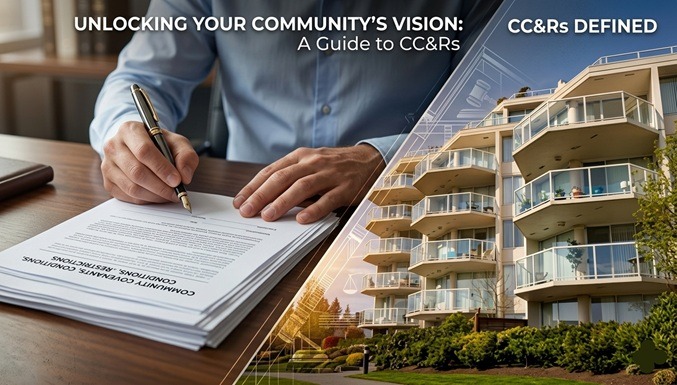
It started with a small envelope. Nothing urgent, and no bold red warnings. Just a neatly printed notice slipped under the door.
Inside, a message:
“You are in violation of the community’s Covenants, Conditions, and Restrictions.”
At first, it didn’t make sense; you owned the house, you paid for it, and you lived in it. So how could someone else tell you what you can or cannot do with your own property?
But as the letters continued, fines, warnings, even threats of legal action, then the picture became clear:
You didn’t just buy a home; you bought into a system of rules that never truly leaves you.
Why Most Homeowners Don’t See This Coming
Buying property feels like the ultimate form of control. Ownership, freedom, stability.
But hidden within many property purchases, especially in planned communities, estates, and modern developments, is a legal framework that quietly limits that control: Covenants, Conditions, and Restrictions (CC&Rs).
Most people:
- Don’t read them
- Don’t understand them
- Don’t realize how enforceable they are
Until it’s too late.
Why This Happens
- The documents are long, technical, and often buried in closing paperwork
- Buyers focus on price, location, and aesthetics, not legal restrictions
- Real estate agents may not fully explain the implications
So people sign without knowing what they’ve agreed to.
What CC&Rs Actually Are
Let’s break it down. Covenants, Conditions, and Restrictions (CC&Rs) are legally binding rules attached to a property, usually enforced by a homeowners association (HOA) or similar governing body.
1. The Core Idea
When you buy property subject to CC&Rs, you agree to follow a set of rules governing how the property is used. These rules are tied to the land, not the person.
That means they follow the property and every future owner.
2. What CC&Rs Can Control
This is where things get unsettling. Depending on the community, CC&Rs may regulate:
- The color of your house
- The type of fence you can build
- Whether you can run a business from home
- Parking rules (including visitors)
- Noise levels
- Pets (type, size, or even existence)
In some cases, even:
- What you can display outside your home
- How your garden must be maintained
3. Are They Legally Enforceable?
Yes. CC&Rs are not suggestions. They are legally binding obligations.
If violated, consequences may include:
- Fines
- Legal action
- Forced compliance
- In extreme cases, liens on your property
4. Global Perspective
CC&Rs are most common in:
- The United States (HOA communities)
- The United Kingdom (restrictive covenants)
- Gated estates and developments across Africa, including Nigeria
In Nigerian estates, similar rules often exist through:
- Estate management agreements
- Developer-imposed guidelines
While enforcement mechanisms may differ, the principle remains the same: Ownership comes with conditions.
How to Protect Yourself
1. Always Request CC&Rs Before Buying
Never assume. Ask for:
- Full documentation
- HOA rules and guidelines
- Enforcement policies
2. Read Beyond the Surface
Focus on:
- Restrictions that affect your lifestyle
- Financial obligations (fees, fines)
- Dispute resolution processes
3. Ask “What If” Questions
- What happens if I violate a rule?
- How are disputes handled?
- Can rules change over time?
4. Understand Amendment Powers
Many CC&Rs can be updated. This means that rules you agree to today may change tomorrow
5. Balance Lifestyle vs Control
Some communities offer:
- Security
- Order
- Property value stability
But at the cost of:
- Personal freedom
- Flexibility
Know your priorities.
The Darker Side of CC&Rs
Let’s be honest, CC&Rs can feel intrusive.
Common Mistakes:
- Ignoring the documents entirely
- Assuming rules won’t be enforced
- Believing “small violations” don’t matter
A Subtle but Serious Risk: Selective Enforcement
Sometimes rules are:
- Applied inconsistently
- Influenced by internal politics
This can create tension and disputes.
Another Overlooked Issue: Escalating Penalties
What starts as a warning can become:
- Repeated fines
- Legal notices
- Court action
And by then, it’s harder, and more expensive to respond.
Ownership Is Not Absolute
Owning property does not mean unlimited control.
It means control within a framework, and CC&Rs are that framework.
They are not inherently bad. In fact, they often:
- Maintain property standards
- Protect community value
- Create predictable environments
But they must be understood, because what you don’t understand, can quietly control you.
The Rules You Can’t See
When you walk into a home, you see:
- Walls
- Space
- Possibility
What you don’t see are the invisible rules attached to it. Rules that shape:
- What you can build
- What you can change
- How you can live
And once you sign, those rules become part of your reality.
If this opened your eyes, don’t stop here. Explore more practical legal insights on Statute Hub, because in property law, the biggest risks are rarely visible; They’re written in documents most people never read.
