

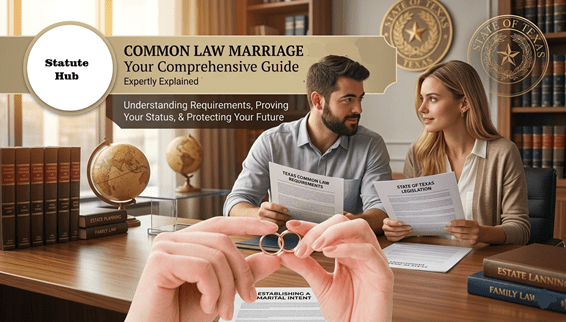
They had been together for eight years; shared rent, shared bills. Shared dreams.
Friends called them “husband and wife.” Family treated them like a married couple. Even their landlord listed them as “Mr. and Mrs.”
So when the relationship ended, she assumed one thing: “I’m entitled to something… right?”
But when she finally sat across from a lawyer, the answer came quietly and devastatingly:
“Not necessarily.”
No wedding, no formal registration, and no legal recognition.
Just years of shared life, with almost no legal protection.
Why Common Law Marriage Is So Widely Misunderstood
Here’s the uncomfortable truth: Most people think they are protected, when they are not.
The idea of common law marriage is one of the most misunderstood concepts in modern relationships.
Many believe:
- Living together for a certain number of years automatically makes you married
- Sharing finances creates legal rights
- Having children together guarantees protection
But in reality, the law doesn’t work on assumptions.
It works on clear legal standards, and those standards vary significantly depending on where you live.
Why This Confusion Happens
- Movies and popular culture oversimplify it
- Laws differ across countries and even states
- Informal relationships feel “real enough” to assume legal backing
The result is that people build lives together without legal safety nets.
What Common Law Marriage Actually Means
Let’s break this down simply.
A common law marriage is a legally recognized marriage between two people who have not had a formal ceremony, but meet specific legal criteria.
However (and this is critical), not all places recognize common law marriage.
1. Where It Exists (And Where It Doesn’t)
In some jurisdictions (like certain U.S. states), common law marriage is recognized, but only if strict conditions are met.
In many others, including most of:
- The United Kingdom
- Most African countries (including Nigeria, under statutory law)
Common law marriage is NOT legally recognized.
This means:
No matter how long you live together, you may not have the legal rights of a spouse.
2. The Key Requirements (Where It Is Recognized)
In places that allow it, couples must typically prove:
- Intent: Both parties intended to be married
- Cohabitation: Living together for a period of time
- Representation: Presenting themselves publicly as a married couple
Even then, proof is not automatic.
It often requires:
- Documents
- Witnesses
- Evidence of shared life
3. The Legal Rights (If Recognized)
If a common law marriage is legally established, partners may gain rights similar to formal spouses, including:
- Property division upon separation
- Inheritance rights
- Spousal support (in some cases)
But if it is not recognized, those rights may not exist at all.
How to Protect Yourself
If you’re in a long-term relationship without formal marriage, here’s what you should do:
1. Stop Relying on Assumptions
Love is emotional. The law is not.
Never assume your relationship is legally protected without confirmation.
2. Understand Your Local Laws
Your rights depend entirely on where you live.
For example:
- In Nigeria: cohabitation does not equal marriage under statutory law
- In some U.S. states: it might, if strict conditions are met
3. Put Agreements in Writing
Consider legal tools like:
- Cohabitation agreements
- Property ownership agreements
- Joint financial documentation
These create clarity where the law may not.
4. Be Intentional About Property Ownership
If you buy property together:
- Ensure both names are on legal documents
- Clarify ownership shares
This prevents disputes later.
5. Plan for the Unexpected
Ask difficult but necessary questions:
- What happens if we separate?
- What happens if one of us dies?
Without planning, the law may not protect you.
The Mistakes That Cost People Everything
Let’s be direct. The biggest risk is not separation.
It’s false security.
Common Mistakes:
- Believing time equals legal status
- Relying on verbal agreements
- Failing to document contributions
- Ignoring inheritance planning
A Subtle but Critical Risk: Death Without Legal Recognition
If your partner passes away:
- You may not inherit anything
- Family members may claim assets
- You may have no legal standing to challenge it
This is one of the harshest realities of unrecognized relationships.
The Law Doesn’t Recognize Love, It Recognizes Structure
Here’s the truth that changes everything: The law is not designed to validate emotions; it is designed to enforce clarity.
You can build a life with someone, you can share everything. But unless that relationship is legally defined, It may not legally exist.
This is not a flaw in the system. It’s a reminder:
Legal protection is something you create, not something you assume.
The Question You Should Ask Today
“If something goes wrong, where do I stand legally?”
If you don’t know the answer, that uncertainty is a risk.
And in law, uncertainty is often where loss begins.
Protect What You’re Building
Explore more practical legal insights on Statute Hub, where real-life situations meet clear legal guidance.
Because understanding the law doesn’t just protect your assets, It protects your future.
