

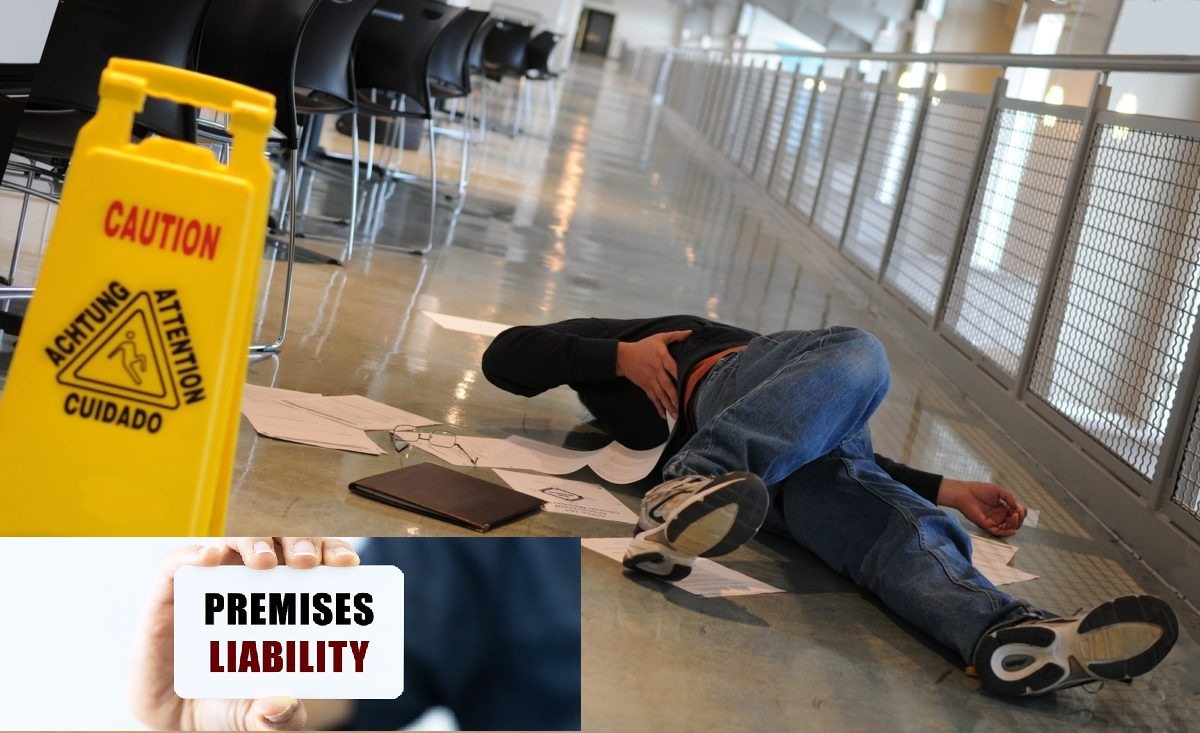
The Floor Looked Completely Normal. It was supposed to be a quick shopping trip. A woman walked into a supermarket, picked up a few items, and headed toward the checkout.
Then, without warning, her foot slipped. She fell hard. For a few seconds, she could not move.
When she looked around, she noticed what had caused it: liquid had been spilled across the floor. There was no warning sign, No barrier, No employee nearby.
The store manager eventually apologized and promised that someone would “look into it.”
But an apology does not pay hospital bills. It does not replace lost income, and it does not answer the question that matters most: Who is legally responsible when you are injured on someone else’s property?
That question takes us into an important area of law known as premises liability.
What Is Premises Liability?
Premises liability is the area of law dealing with injuries or harm caused by dangerous or unsafe conditions on property.
The basic idea is straightforward:
People who control property may have a legal responsibility to take reasonable steps to keep it reasonably safe for people who are lawfully there.
Depending on the jurisdiction and circumstances, that responsibility may fall on:
- Property owners
- Tenants
- Businesses
- Landlords
- Property managers
- Occupiers
- Government authorities
- Other parties responsible for maintaining the premises
The precise legal rules vary from one jurisdiction to another. But the underlying principle is widely recognized: If you invite people onto property, you may have responsibilities toward their safety.
Why Premises Liability Matters
Most people never think about premises liability until something goes wrong.
They walk into:
- A supermarket
- Hotel
- Restaurant
- Shopping mall
- Office
- Apartment building
- School
- Hospital
- Parking lot
- Public facility
and assume the environment is reasonably safe. That assumption is natural.
But property can contain hidden dangers;
- A broken staircase,
- A wet floor,
- Poor lighting.
- An unsecured balcony.
- An exposed electrical hazard.
- A collapsing ceiling.
- A dangerous hole in a walkway.
When a property-related hazard causes injury, the legal question becomes more complicated than simply asking: “Who owns the building?”
Ownership and responsibility are not always the same thing.
The Difference Between Ownership and Control
This is one of the most important concepts in premises liability. The person who owns a property may not be the person responsible for maintaining it.
Imagine a shopping centre.
- A landlord owns the building.
- A supermarket leases one of the units.
- A cleaning company maintains the floors.
- A security company manages certain safety procedures.
If a customer slips on a freshly mopped floor, several questions may arise:
- Who created the dangerous condition?
- Who knew about it?
- Who was responsible for cleaning it?
- Who was supposed to put up a warning sign?
- Who had control over that part of the property?
The answer could determine who is legally responsible. That is why premises liability cases can become surprisingly complicated.
What Does a Property Owner or Occupier Owe You?
There is no single universal duty that applies to every person who enters a property.
The legal duty can depend on several factors, including:
- Why the person was on the property
- Whether the visit was expected
- Whether the person was invited
- Whether the owner knew about the danger
- Whether the danger was reasonably foreseeable
- Whether reasonable precautions were taken
A paying customer, an invited guest, a trespasser, and an employee may not necessarily receive exactly the same legal protection.
This distinction matters.
The Three Questions That Often Determine a Premises Liability Case
When someone is injured on another person’s property, three questions become particularly important.
1. Was There a Dangerous Condition?
There must generally be some condition that created an unreasonable or foreseeable risk of harm.
Examples may include:
- Wet floors
- Broken stairs
- Uneven pavement
- Missing handrails
- Poor lighting
- Exposed wiring
- Falling objects
- Unsafe construction
- Defective equipment
- Unsecured animals
But not every inconvenience is a legal hazard.
A property does not have to be perfectly safe. The question is usually whether the condition created a legally significant risk in the circumstances.
2. Did the Responsible Party Know – or Should They Have Known- About It?
This is where many cases become difficult.
Suppose someone spills a drink in a supermarket and another customer slips on it 30 seconds later.
The supermarket may argue:
“We didn’t know it was there.”
That may matter.
Now imagine employees had been warned about the spill an hour earlier and did nothing. The situation is very different.
The law may consider whether the responsible party:
- Actually knew about the hazard
- Should reasonably have discovered it
- Had enough time to correct it
- Failed to provide an adequate warning
Knowledge can therefore become one of the most important issues in a premises liability dispute.
3. Did the Hazard Actually Cause the Injury?
A dangerous condition alone does not automatically establish liability. There must generally be a connection between the condition and the harm suffered.
For example:
A person walks into a restaurant with a wet floor but does not slip. There may be a safety issue, but there is no injury caused by that condition.
Now imagine the person slips on the same floor, breaks a wrist, and requires medical treatment.
The legal analysis changes significantly. The connection between the hazard and the injury becomes central.
Common Premises Liability Accidents
Slip and Fall Accidents
These are among the most recognizable premises liability claims.
They can involve:
- Spilled liquids
- Oil
- Loose tiles
- Uneven flooring
- Poorly maintained walkways
However, the fact that someone fell does not automatically prove negligence.
Evidence about the condition of the property and the circumstances surrounding the accident matters.
Falling Objects
Imagine a customer walks through a store and a poorly secured shelf collapses.
The resulting injuries could raise questions about:
- Maintenance
- Inspection
- Installation
- Warning procedures
- Reasonable safety measures
Unsafe Stairs
Staircases create obvious risks when they are poorly maintained.
Potential hazards include:
- Broken steps
- Missing handrails
- Excessively slippery surfaces
- Poor lighting
- Structural defects
A property controller may face legal scrutiny if reasonable safety measures were ignored.
Poor Security
Premises liability can sometimes extend beyond physical defects.
Suppose a business operates in an environment where serious criminal activity is reasonably foreseeable.
If the business ignores known security risks, questions may arise about whether reasonable security measures should have been taken.
These cases can be legally complex because businesses are not insurers of every person’s safety.
The specific circumstances matter enormously.
What You Should Do Immediately After an Accident
If you are injured on someone else’s property, the moments immediately afterward can become extremely important.
Get Medical Attention
Your health comes first. Even injuries that initially appear minor can become more serious later.
Medical records can also document the nature and timing of your injuries.
Photograph the Scene
If you are physically able to do so, photograph:
- The hazard
- The surrounding area
- Warning signs
- Lighting conditions
- Damaged equipment
- The exact location of the accident
- A dangerous condition can disappear quickly.
- A spill may be cleaned.
- A broken step may be repaired.
- A warning sign may suddenly appear.
Photographic evidence can preserve what the scene looked like at the time.
Identify Witnesses
If people saw what happened, obtain their contact information if possible.
Witnesses may later help establish:
- What happened
- What the property looked like
- Whether employees knew about the danger
- Whether warnings were present
Report the Incident
Notify the property owner, manager, security officer, or other responsible person.
Ask for the incident to be documented. But be careful about what you say.
You do not need to make an immediate legal conclusion such as:
“Your company was negligent.”
Simply provide an accurate account of what happened.
Be Careful With What You Sign
After an accident, someone may ask you to complete an incident report.
That is normal.
But you should read carefully before signing anything.
Do not knowingly sign a statement that inaccurately describes:
- How the accident occurred
- Whether you were injured
- What caused the injury
If you are unsure about a document, particularly where significant injuries or potential compensation are involved, consider obtaining independent legal advice before signing it.
What Property Owners Should Do
Premises liability is not only about protecting injured people. Property owners and businesses also need to understand their responsibilities.
A sensible safety system may include:
Regular Inspections
Hazards should be identified before someone gets hurt.
Prompt Repairs
Known dangers should be corrected within a reasonable time.
Clear Warnings
Where an immediate repair is impossible, appropriate warnings or barriers may reduce risk.
Proper Documentation
Businesses should maintain records of:
- Inspections
- Maintenance
- Repairs
- Cleaning
- Safety complaints
Documentation can become extremely important when an accident occurs.
The Most Dangerous Mistake: Assuming an Accident Automatically Means Someone Is Liable
It does not.
This is one of the biggest misconceptions surrounding premises liability. A person can be injured without another person being legally responsible.
For example, a hazard may have appeared moments before the accident and the responsible party may have had no reasonable opportunity to discover it.
Alternatively, the injured person may have ignored an obvious warning.
Or the accident may have resulted from something unrelated to the property’s condition.
The law generally requires more than simply proving:
“I was injured here.”
The circumstances matter.
Your Own Actions Can Also Matter
In many jurisdictions, the injured person’s own conduct can affect a claim.
For example, imagine a shopping centre has a clearly marked wet floor.
A person deliberately walks around the barrier, runs across the wet area, and falls.
The property owner’s conduct may be only part of the legal analysis.
Depending on the jurisdiction, principles such as contributory or comparative negligence may reduce or even prevent recovery.
This is why premises liability is rarely as simple as finding someone to blame.
What If the Property Is Rented?
Renting property does not automatically eliminate liability.
- A landlord may have certain responsibilities.
- A tenant or occupier may have others.
- A maintenance contractor may have separate responsibilities.
The answer depends heavily on:
- The lease
- Actual control of the area
- The nature of the hazard
- Who knew about it
- Who was responsible for repairs
- Local law
This is particularly important in commercial properties where several businesses and contractors may share responsibility.
What If You Were Injured at Someone’s Home?
Premises liability is not limited to businesses.
Private homeowners may also have legal responsibilities toward visitors.
But again, the legal duty can depend on the circumstances.
An invited dinner guest is different from someone who enters a property without permission.
A child may also receive different treatment under certain legal doctrines because children may be particularly vulnerable to certain hazards.
The specific facts matter.
The African Context: Why This Matters
Across African cities, rapid construction and urban development have created new environments where premises liability issues can arise.
People regularly interact with:
- Shopping complexes
- Hotels
- Event centres
- Apartment developments
- Construction sites
- Office buildings
- Restaurants
- Schools
- Public facilities
Yet many people do not know what to do after being injured on someone else’s property.
There is often an assumption that accidents are simply “unfortunate.”
Sometimes they are.
But sometimes an injury is the result of a preventable failure to maintain reasonably safe premises.
The legal framework will differ from country to country, so anyone considering a claim should examine the law applicable to the location where the incident occurred.
The Evidence Can Disappear Before the Case Begins
This is perhaps the most important practical lesson.
Suppose you slip on a wet floor.
You leave the building.
The cleaning staff immediately dries the floor.
The warning signs appear.
The area is cleaned.
By the next morning, there may be no visible evidence that the hazard ever existed.
That is why early documentation matters.
Photographs, witness details, incident reports, medical records, CCTV preservation requests, and other evidence can become extremely valuable.
If CCTV may have captured the accident, act quickly.
Many surveillance systems automatically overwrite older footage.
When Should You Speak to a Lawyer?
You should seriously consider obtaining legal advice where:
- The injury is serious
- You require ongoing treatment
- You have lost income
- Permanent disability is involved
- The property owner denies responsibility
- An insurance company is involved
- The circumstances are disputed
- There may be multiple responsible parties
- A limitation period may be approaching
A lawyer can help determine whether the facts support a viable claim under the law applicable to the location.
Importantly, seeking legal advice does not necessarily mean filing a lawsuit.
Sometimes the best outcome comes through negotiation or settlement.
The Deeper Lesson: Property Comes With Responsibility
A building is not simply bricks, concrete, glass, and steel.
Once people enter that space, responsibility enters with them.
Property owners and occupiers cannot necessarily prevent every accident.
But they can take reasonable steps to identify foreseeable hazards and respond appropriately.
Visitors, meanwhile, have responsibilities of their own.
They should pay reasonable attention to their surroundings and follow legitimate safety instructions.
Premises liability sits somewhere between these two ideas:
The person controlling the property must take reasonable care, and the person using the property must also act reasonably.
That balance is what makes the law more nuanced than simply asking, “Whose fault was it?”
Final Thoughts: An Accident May Last Seconds. The Consequences Can Last Years.
A wet floor can take seconds to cause an injury.
A broken staircase can change someone’s life in a single moment.
A poorly maintained property can turn an ordinary visit into months of medical treatment, lost income, and uncertainty.
Premises liability law exists because safety is not supposed to be an afterthought.
But knowing that a property owner may have a legal duty is only the beginning.
If you are injured, preserve evidence.
Report what happened.
Seek appropriate medical care.
Document the scene.
Understand your rights.
And before accepting responsibility—or signing away a potential claim—understand the law that applies to your situation.
Because sometimes the question after an accident is not simply:
“How did this happen?”
It is:
“Could this have been prevented, and who was responsible for preventing it?”
