

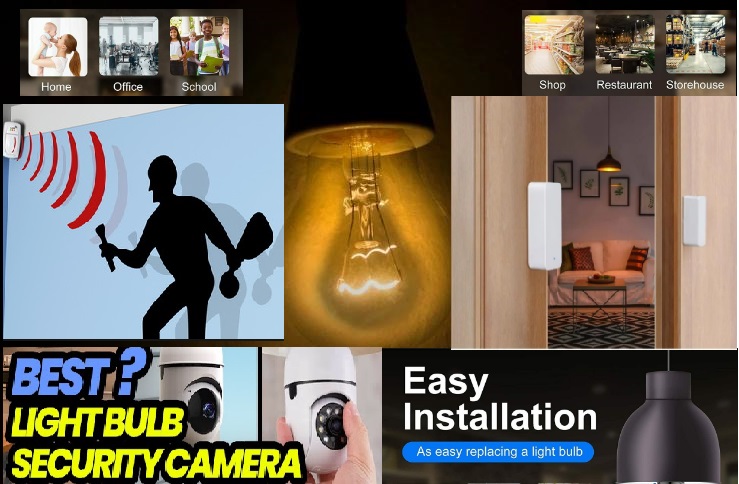
A light bulb camera, also known as a bulb camera or smart bulb camera, is a type of security camera that is disguised as a standard light bulb. It combines the functionality of a surveillance camera with that of an LED light bulb, allowing you to monitor an area while providing illumination at the same time.
These devices are typically used for home security and can be installed in various locations, such as outdoor porch lights or indoor light fixtures.
A light bulb camera works by combining the functions of a traditional LED light bulb with those of a surveillance camera. A light bulb camera provides a discreet way to combine lighting and surveillance in one device, enhancing your home security setup.
The Security Upgrade That Turned Into a Police Case
It felt like a smart decision. Tunde had just moved into a new apartment. Lagos was busy, unpredictable, and, like any major city, security was always a concern. He wanted something simple, discreet, and effective.
Then he found it. A light bulb camera.
It looked like an ordinary bulb. Screwed into a socket. Connected to his phone. Gave him a full view of his living room; even when he was miles away.
Affordable. Easy. Invisible. Perfect. Or so he thought.
Three weeks later, there was a knock on his door. Not from a neighbor. From the police.
A guest who had visited his apartment discovered the camera, hidden in plain sight. They claimed they were recorded without consent.
What started as a security upgrade quickly became a privacy violation case.
And suddenly, Tunde wasn’t protecting his home anymore; he was defending himself.
Here’s an explanation of how the Light Bulb Camera typically operates
Inside the light bulb casing, there is a small camera and lens assembly. This camera is designed to capture video footage and sometimes images. The camera is connected to a processing unit or chipset, which handles tasks like encoding the video feed, managing network connections, and processing other data.
Connectivity and Power Source
The light bulb camera is equipped with Wi-Fi capabilities, allowing it to connect to your home network. This enables it to communicate with your smartphone or other devices via the internet.
The light bulb camera needs a power source to function. It typically uses the same socket that a regular light bulb would use. Some models may require additional wiring or a compatible fixture.
In addition to the camera, the device also contains LED lights that provide illumination. These can be controlled through a mobile app or a compatible smart home platform. You can turn the lights on and off, adjust brightness levels, and sometimes even change the color temperature.
Motion Detection, Sensors and other things:
Many light bulb cameras come equipped with motion sensors. These sensors can detect movement in the camera’s field of view and trigger alerts or recordings. Some models have built-in microphones and speakers for two-way communication. This allows you to talk to people near the camera, which can be useful for home security purposes.
Recorded video footage can be stored in different ways. Some light bulb cameras have built-in storage via a microSD card slot. Others may offer cloud storage options, where the footage is saved on remote servers.
To control and monitor the light bulb camera, you’ll use a mobile app on your smartphone or a web interface on your computer. Through the app, you can access live video feeds, review recorded footage, adjust settings, and receive alerts.
Integration with Smart Home Ecosystems:
Many light bulb cameras are designed to be compatible with popular smart home platforms like Amazon Alexa, Google Assistant, or Apple HomeKit. This allows for seamless integration with other smart devices in your home.
Because the light bulb camera is connected to your home network, you can access its features remotely as long as you have an internet connection. This means you can monitor your property even when you’re not at home.
Why Light Bulb Cameras Are Legally Dangerous
The rise of smart home devices has made surveillance easier than ever. Among them, the light bulb camera stands out for one reason:
It doesn’t look like a camera.
And that’s exactly where the legal danger begins.
Why People Get It Wrong
- It feels like personal security, not surveillance
People assume: “It’s my home, I can monitor it.” - It’s hidden, so people think it’s harmless
But legally, hidden recording raises serious concerns. - They don’t understand consent laws
Recording someone, even in your own space, can still violate their rights.
The Real Risks of Using a Light Bulb Camera
- Violation of privacy laws
- Criminal charges in some jurisdictions
- Civil lawsuits from guests, tenants, or workers
- Breach of trust and reputational damage
- Legal penalties, including fines or imprisonment
What feels like protection can quickly become surveillance misconduct.
What the Law Actually Says About Light Bulb Cameras
Let’s strip this down to what really matters.
1. Visibility vs. Consent
The biggest issue with a light bulb camera is not the recording itself. It’s the lack of awareness.
In many legal systems across the world:
Recording people without their knowledge, especially in private spaces, can be illegal.
This includes:
- Living rooms
- Bedrooms
- Private offices
- Rental spaces
2. Your Home Is Not a Legal Free Zone
A common misconception:
“It’s my house, I can do what I want.”
Not quite. The law protects people, not just property.
If someone enters your home:
- They still have reasonable expectations of privacy
- You cannot secretly record them in ways that violate that expectation
3. Hidden Cameras Raise Stronger Legal Concerns
Unlike visible CCTV cameras, a light bulb camera is designed to blend in.
That design alone can:
- Suggest intent to conceal
- Increase legal liability
In many jurisdictions, hidden cameras are treated more strictly than visible ones.
4. Consent Laws Vary, But Risk Is Universal
Globally, there are two common legal standards:
- One-party consent (only one person needs to know about the recording)
- Two-party consent (everyone being recorded must agree)
But here’s the nuance:
Even in one-party consent systems, hidden cameras in private spaces can still be illegal.
Especially when there is no clear security justification, and the recording feels intrusive or deceptive
5. Special Risk Areas
Using a light bulb camera becomes especially dangerous in:
- Bathrooms or bedrooms → Often strictly illegal
- Rental properties → Tenants have strong privacy rights
- Workspaces → Employees must be informed
- Shared apartments → Consent becomes complex
How to Use a Light Bulb Camera Legally
You don’t have to abandon smart security, but you must use it responsibly.
1. Be Transparent – Always
If you’re using a light bulb camera:
- Inform anyone entering the space
- Use visible notices where appropriate
Transparency reduces legal risk instantly.
2. Avoid Private Areas Completely
Never install cameras in:
- Bathrooms
- Bedrooms (especially guest rooms)
- Changing areas
These are legally sensitive zones.
3. Understand Your Local Laws
Whether in Nigeria, the UK, or elsewhere:
- Research surveillance laws
- Check data protection regulations
Ignorance is not a defense.
4. If You’re a Landlord, Be Extremely Careful
Installing a light bulb camera in a rental property without disclosure can:
- Lead to lawsuits
- Violate tenant rights
- Result in criminal penalties
5. Use Visible Alternatives When Possible
A visible security camera:
- Signals intent (security, not secrecy)
- Reduces suspicion
- Strengthens your legal position
6. Secure Your Data
It’s not just about recording; it’s about storage.
Ensure:
- Footage is protected
- Access is restricted
- Data is not misused
Because a data breach can create another layer of legal trouble.
The Mistakes That Destroy Cases
Let’s talk about what gets people into serious trouble.
“I Didn’t Know It Was Illegal”
This doesn’t work. Courts don’t excuse ignorance, especially in privacy matters.
“It Was for Security”
Intent helps, but it’s not everything. If your method violates privacy, your intention won’t save you
“No One Complained”
Until someone does. And when they do, past recordings can:
- Be used as evidence
- Trigger retroactive legal consequences
Underestimating Emotional Impact
Privacy violations are not just legal issues. They are personal. People feel:
- Betrayed
- Violated
- Exposed
And that often leads to stronger legal action.
Surveillance Without Awareness Is a Liability
Here’s the truth that changes everything:
Security is not just about watching, it’s about respecting boundaries.
A light bulb camera is powerful, but power without awareness becomes risk.
When you understand the law:
- You protect your home and your integrity
- You avoid unnecessary conflict
- You use technology with confidence
2 Other Top Gadgets to Save You From Burglary

1. Motion sensor alarm
A motion sensor alarm is a security device designed to detect motion or movement within a specific area and trigger an alarm or alert when motion is detected. These alarms are commonly used for home security, commercial security, and even industrial applications. They serve as a valuable component in a security system by alerting occupants or security personnel to potential intruders or unauthorized activity.
Here’s how a motion sensor alarm typically works:
Detection Technology:
Motion sensor alarms use various technologies to detect motion within their coverage area. The most common types of motion sensors include:
- Passive Infrared (PIR) Sensors: These sensors detect changes in heat radiation. When a warm object, like a human body, moves within the sensor’s field of view, it triggers an alarm.
- Microwave Sensors: These sensors emit microwave signals and measure their reflections. If there is a change in the reflected signal, such as due to a moving object, it triggers the alarm.
- Ultrasonic Sensors: Ultrasonic sensors emit high-frequency sound waves and listen for their reflections. Moving objects disrupt these sound waves, leading to an alarm.
- Dual Technology Sensors: Some motion sensors combine two or more technologies (e.g., PIR and microwave) to reduce false alarms and improve accuracy.
Coverage Area:
Motion sensor alarms are designed to cover specific areas or zones. The coverage area can vary based on the sensor’s design and purpose. Some sensors have a wide coverage area, while others are designed for narrow, targeted zones.
Alarm Trigger:
When the motion sensor detects movement, it triggers an alarm. This alarm can take various forms, depending on the specific system and its configuration:
- Audible Alarm: The sensor can trigger a loud siren or audible alert to alert people nearby.
- Silent Alarm: In some cases, the alarm can be silent, alerting a central monitoring station or security personnel without sounding an audible alarm.
- Notification: Modern motion sensor alarms often send notifications to a smartphone or computer through a mobile app or monitoring service.
Integration:
Motion sensor alarms can be integrated into a larger security system, including door/window sensors, security cameras, and access control systems. This integration allows for a comprehensive security solution.
Adjustable Settings:
Many motion sensor alarms offer adjustable sensitivity settings, allowing users to fine-tune the sensor’s response to avoid false alarms from pets, changing environmental conditions, or other non-threatening sources of motion.
Power Source: Motion sensor alarms can be powered by batteries or wired into an electrical system, depending on the model and installation requirements.
Applications: Motion sensor alarms are used in a variety of settings, including homes, businesses, warehouses, and public spaces, to detect and deter unauthorized access or intruders.
Just like a light bulb camera, Motion sensor alarms are a crucial component of many security systems, helping to detect and respond to potential security threats quickly and effectively. They can provide peace of mind by enhancing the security of your property.
2. Window and Door Sensors
Window and door sensors are essential components of home security systems, designed to alert homeowners or monitoring services when doors or windows are opened or tampered with. These sensors help protect your home from unauthorized entry and can be a crucial part of your overall security setup.
How Window and Door Sensors Work:
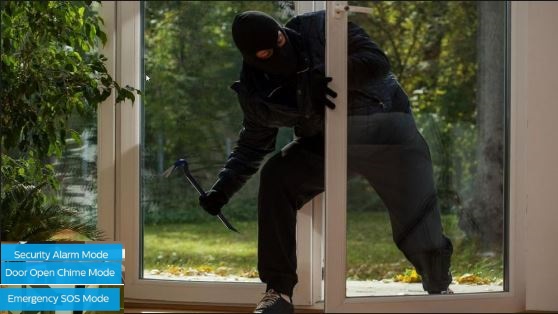
- Magnetic Contact Sensors: The most common type of window and door sensor consists of two parts: a magnet and a sensor. The magnet is typically placed on the moving part of the door or window (e.g., the door frame or window frame), and the sensor is placed on the stationary part (e.g., the door or window itself). When the door or window is closed, the magnet and sensor are in close proximity, creating a closed circuit. When the door or window is opened, the magnetic field is disrupted, breaking the circuit and triggering an alarm.
- Wireless Communication: Many modern window and door sensors are wireless, using radio frequency (RF) or Zigbee/Z-Wave technology to communicate with a central control panel or hub. This wireless communication allows for easy installation and flexibility in sensor placement.
- Wired Sensors: Some older or professionally installed security systems may use wired window and door sensors. These sensors are connected to the control panel via wires and are typically installed during construction or a home security system upgrade.
Why Window and Door Sensors Are Important:
- Burglar Deterrence: Window and door sensors act as a deterrent to potential burglars. When they see that a home is equipped with a security system, including visible sensors on doors and windows, they may think twice about attempting a break-in.
- Immediate Alert: If an intruder attempts to enter your home through a window or door protected by these sensors, the system can trigger an immediate alarm. This alert can take the form of a loud siren, notifications to your smartphone, or both, depending on your system’s setup.
- Home Automation: Window and door sensors can also be integrated into home automation systems. For example, you can set up your system to automatically turn on lights, adjust thermostats, or activate cameras when a sensor is triggered.
- Safety: These sensors are not only for security but can also serve as safety devices. They can alert you if a child or elderly family member opens a door or window during specific times when it’s not expected.
- Customization: Many window and door sensors allow for customization of settings, including adjusting sensitivity to prevent false alarms and setting up different modes for different times of day or when you’re home vs. away.
How to Choose the Right Light Bulb Camera and other Security Gadgets for Your Home
Here are some factors to consider when choosing the right light bulb camera for your home:
- Resolution: The resolution of the camera will determine the quality of the video footage. Look for a camera with at least 1080p resolution.
- Field of view: The field of view of the camera will determine how much of the room it can see. A wider field of view is better for larger rooms.
- Night vision: A camera with night vision will allow you to see in low-light conditions.
- Motion detection: A light bulb camera with motion detection will alert you if someone enters your home.
- Two-way audio: A camera with two-way audio will allow you to communicate with people in the room.
- Cloud storage: Cloud storage allows you to store your video footage online, so you can access it from anywhere.
- Price: Light bulb cameras range in price from around $50 to $200. Consider your budget and what features are important to you.
Once you have considered these factors, you can start narrowing down your choices. Read reviews of different cameras to get an idea of what other people think of them. And don’t forget to check the compatibility of the camera with your Wi-Fi network.
No matter which light bulb camera you choose, make sure to install it properly and keep it up to date with the latest firmware. This will help ensure that you get the most out of your camera and that it is secure.
Here are some additional steps and considerations to help you make your home safe:
- Conduct a Home Security Assessment: Start by evaluating your home’s security needs. Walk around your property and identify potential vulnerabilities, such as entry points like doors and windows, blind spots, and areas where valuable items are stored.
- Determine how much you’re willing to invest in home security gadgets. Having a budget in mind will help you prioritize which devices to purchase and how many.
- Identify Your Priorities: Consider what you want to achieve with your security system. Are you primarily concerned about intrusion detection, fire and smoke protection, surveillance, or a combination of these? Your priorities will guide your choices.
- Prioritize Wireless Options: Wireless security gadgets are often easier to install and more flexible in terms of placement. They also tend to be more user-friendly for DIY installations.
- Determine the power source for your gadgets. Some devices run on batteries, while others require electrical wiring. Battery-powered devices are often easier to install but may require regular battery changes.
Remember that no security system is one-size-fits-all, so it’s essential to tailor your choices to your specific needs and circumstances. Regularly review and update your security measures as your needs change or as technology evolves to keep your home safe and secure.
The Line Between Safety and Surveillance Is Thin
That small device in your ceiling? It can protect you, or it can expose you.
The difference is not in the technology; It’s in how you use it. In today’s world, the real danger isn’t just crime; it’s crossing a legal line you didn’t even know existed.
In Conclusion
When choosing the right gadgets for your home, it’s important to consider the size of your home, the layout of your home, the legal implications and your budget. You should also make sure that the gadgets are easy to install and use.
Light bulb cameras are small and discreet, making them difficult for burglars to spot. They can record video and audio, so you can capture evidence of a burglary. Some light bulb cameras also have motion detection features, so you can be alerted if someone enters your home.
Motion sensor alarms are triggered by movement, making them a good way to deter burglars. They can also be used to alert you if someone is in your home when you’re not there. Security cameras can record video of your home, even when you’re not there.
At Statute Hub, we break down the legal risks hidden in everyday decisions, so you can act with clarity, not fear. Explore more. Stay informed. Protect yourself.
Because in a world of smart devices…Legal awareness is your smartest security system.